
“To Be Bold and Gracious”
Preface:
The coffee shop was bustling with students and adults on their computers, typing away, sipping on their various coffees. And amongst the customers sat a pastor, author, democrat. The man running for Representative in Arkansas’ third district in 2026. But, more than a politician. Robb Ryerse. This is His Story.

Hello, Meet Robb Ryerse:
Robb Ryerse, from Cleveland, Ohio, has lived in various places across the country after attending Baptist Bible College in Clark Summit, Pennsylvania, and then seminary at Biblical Theological Seminary in Hatfield, Pennsylvania.
“I was a third generational pastor, my grandfather was a Baptist pastor, my dad is a Baptist pastor, so I went into the family business,” he said, laughing.
He explained that the denomination to which he belonged was different from the Southern Baptist Church commonly found in these parts. Instead, they were not allowed to associate with the Southern Baptists because they were “too liberal”.
The first church he pastored was in NYC, then outside of Boston, then Central Michigan, and after 10 years of pastoring in that denomination, he went through a deconstruction of faith, before that was a word. When nothing was making sense, he read A New Kind of Christian by Brian McLaren and started to realize he was not alone in this.
Because of that deconstruction, in 2005, it led the Ryerse family to leave behind their church, their network, their friends, everything. They searched for the right place, a growing city and a livable economy, a place for new beginnings, to create a new church. They landed in Northwest Arkansas.
What he hadn’t expected and what he loved most about this area was the optimism in the air. Not every city had it, but in this small piece of the state there was this sense that “Our little 5 and dime store could become the biggest retailer in the world.” It was just in the air.
Heartbreak Hogs:
“I’m a diehard Browns fan, which is just the worst.” He said, laughing. “The worst. I tell people you have no idea what it’s like to be a Browns fan, and then I moved here and came here and became a Razorback fan and was like, “Oh, Razorback fans understand.”
From Founding a Church:
Robb and his wife, Vanessa, began Vintage Fellowship in 2005.
“We started Vintage because we used to say we wanted to lead a church that we would go to even if we weren’t being paid to be there.” He said.
After reading Good to Great by Jim Collins, a book dedicated to figuring out the one thing you can do better than anyone else in the world, Robb began to consider what their “thing” would be.
“We knew that we would never be the biggest church, never have the best building, never going to have the best sermons, or music, or the best children’s ministry or youth group, so we tried to figure out what we could do that would be the best in the world. So, we decided we could be the most authentic church in the world and strive for that.”
He pastored at their church for 15 years before retiring from ministry, a different path presenting itself.
Politics.
To Running for Office:
“I grew up Republican and grew up very conservative, and when Donald Trump got elected in 2016, I was absolutely horrified that the tribes that I had always been a part of were responsible.”
In 2016, 92% of Republicans voted for Trump, 77% of white evangelicals, and 62% of white men [Pew Research Center, 2016 Electorate]
“I had this deep sense that I had to do something, but I had no idea what that meant.”
But, one night, coming home after work, his wife held out her phone at him, a podcast shining up from her phone, “You’ve got to listen to this. You’ve got to do this,” she said. After he put his kids to bed that night, he walked out to the porch, helping himself to a cigar, and listened to the podcast.
“I don’t know if you’ve ever had that day where you go through your normal stuff, and then you get to bed that night thinking, ‘I’m going to run for Congress.’ I had that day.”
The podcast was about Brand-New Congress; a model made for people to nominate someone who should run for Congress. And after talking with some friends about it, a few weeks later, he received a call from Brand New Congress, asking if he was interested in running for Congress.
The strategy was to run Republicans in bright red districts, and Democrats in deep blue districts, and eject incumbents from office, or in political slang, “throw out the bums movement”. Although the strategy didn’t account for the extent to which Trump altered the political landscape.
He was the only Republican who was a part of that effort in 2018. He was in a group of candidates that were recruited by BNC, like Cory Bush from St. Louis, an unknown bartender from the Bronx named Alexanderia, whom he simply called Alex, long before she was called AOC.

And although he was primaried in the election against Steve Womack, he learned so much, and after the campaign, a new door was being knocked on.
A friend, a fellow pastor, was starting a group called Vote Common Good, an organization trying to explain to religious voters, particularly white Evangelicals and white Catholics, why they should vote differently and support Democrats.
Since 2018, he has been the Political Director for Vote Common Good. He spent an election cycle as the Executive Director, worked on various campaigns, and started a Vortex pack with Chris Jones, a politician from Arkansas’ second district.

He also works as the Director of Development for New Beginnings, an organization working to end chronic homelessness in Fayetteville, while also managing a new building rental space in Downtown Springdale.
“And all that led to – I guess time is a flat circle – we’re back here Trump is president again, I guess I’m running for Congress again,” he laughed.
So, You’re an Author?
“Fundamorphosis – How I left Fundamentalism but Didn’t Lose My Faith- is the first book I wrote, it’s about that transformation in my theology, and I wrote it for all those people like me that grew up fundamentalist and woke up one day and it just stopped making sense.”
The book digs into exactly how his beliefs transformed and what that would look like in a church context.
Running for Our Lives was a spur of the moment book brought about by his publisher giving him three days for an outline on a book, leading to a book about his campaign in 2018.
The Gospel According to Donald Trump came about late one night this summer, while his wife was studying for seminary. Sitting, just thinking, he started to remember Thomas Jefferson’s Bible, where Jefferson cut out everything he was convinced Jesus didn’t do, any evidence of his deity, and was left with the moral teachings of Jesus.
“I just had this random thought one night, I wondered if Donald Trump were to take his Sharpie to the Gospels, what he would keep and what he would get rid of. So, I downloaded a PDF of Matthew and started reading and redacting all of the stuff that Donald Trump wouldn’t like.”
Ryerse explained, the first to go was faith, because throughout his life, Trump has expressed that he only trusts himself. Then redacted all of the sin, because Trump confessed to never asking for forgiveness and recently claimed he is “not heaven-bound”. He got rid of the powerful women, got rid of all the love, grace, compassion, kindness, all the accountability- because Jesus always corrected the political leaders and false teachers, and Donald Trump continues to let the powerful get away with everything they want to do.
“And what I was left with which was so fascinating to me and such an interesting experience. What I was left with after was A Jesus who amassed followers and performed miracles. It was about fame and power. I was blown away. This was the gospel according to Trump. It is about fame and power.”
Faith, Politics, and American Apple Pie
The struggle of faith in politics, the separation of Church and State, a fundamental principle the country was founded on, has been an issue since the colonies.
“I say it’s as American as apple pie to wrestle with the relationship between church and state,” Ryerse said.
But, for Robb, he believes in the separation of Church and State. Explaining how his faith is not the thing that determines what laws ought to be, because not everybody shares his faith. Rather, there should be a basis of the common good that motivates the laws that are made and the policies that are passed.
But the country is facing strife in this area, with the rise of Christian Nationalism, which is the political ideology of fusing one’s American identity with their Christianity. He explained the dangers of this for the country and the church.
What would happen if Christianity became the preference in policy? Not only will Christians be hurt by this, but non-Christians, people of other faiths, and those of no faith. Everyone will suffer, Ryerse explained.
And then it begs the question, “Whose Christianity?” He asked, “Whose Christianity are we talking about, because there is so much variety. When the loudest and strongest voice gets the preference, there are a lot of people who get drowned out, and that’s not what America is about.”
Rather, he recognizes the importance of the distinction, but like everyone, he has his own beliefs.
“On a personal level, though, my faith motivates me. And I see in Jesus someone who cares for other people, who isn’t stingy with healthcare, is willing to challenge authority and power and speak up for those who are being marginalized, and I find that as a personal motivation, not a policy motivation.”
Faith, Family, and Freedom
“To be a Chrisitan is to be a Republican”: a misconception, yet common throughout politics.
“One of the things we say at Vote Common Good, is it’s almost like you’re going through a drive through to order a burger, and the fries come along with it. There’s a lot of people whose Christian identity is directly tied to their Republican identity. The reality is that no political party owns Christianity, and it’s really dangerous when one party has tried to own it.” Ryerse explained.
Growing up, Christian Democrats were a complete unknown to him; they were not a part of his world, so in his campaign, he is trying to be upfront with who he is, to break the mold of what is typical.
So, he created his campaign with that in mind, forming it under three factors. Factors that are not inherently Republican.
Faith, Family, and Freedom. Values that are shared by all human beings.
“When we talk about faith, it’s not religious faith: It’s our belief in each other. That we can accomplish great things when we work together.”
“Families come in all sorts of shapes and sizes, and we need to do everything in our power to protect families. What we’ve got is the ‘family values’ party doing all sorts of things to hurt families, with economic policies, with the empowering of ICE, ripping families apart, and hurting education. These are all things that hurt families, and our policies and laws need to support and protect all families in all the sorts of ways they should.”
“Then Freedom- America is less free now than it was before, and that is a crazy thing to think about. So, for me, freedom is freedom to have healthcare, get medical treatment without it bankrupting you, my 11 year old daughter should have the freedom to go school and get a good education and come home safely at the end of the day, people should have the freedom to make health decisions about their own body without Steve Womack being in the doctor’s office with them, all of these are issues of freedoms.”
“Let’s talk about what faith actually means when we believe in each other instead of being so divided like we are. Let’s talk about what will actually make a difference for families, and let’s talk about making sure our freedoms are not eroded but expanded and preserved.”
The Story Behind the Story:
Through the highs and lows he has faced, through strained relationships with family members because of politics, and seasons of uncertainty and unemployment, he relied on the optimism of his community and the support of his family.
“I am most proud of my family.”
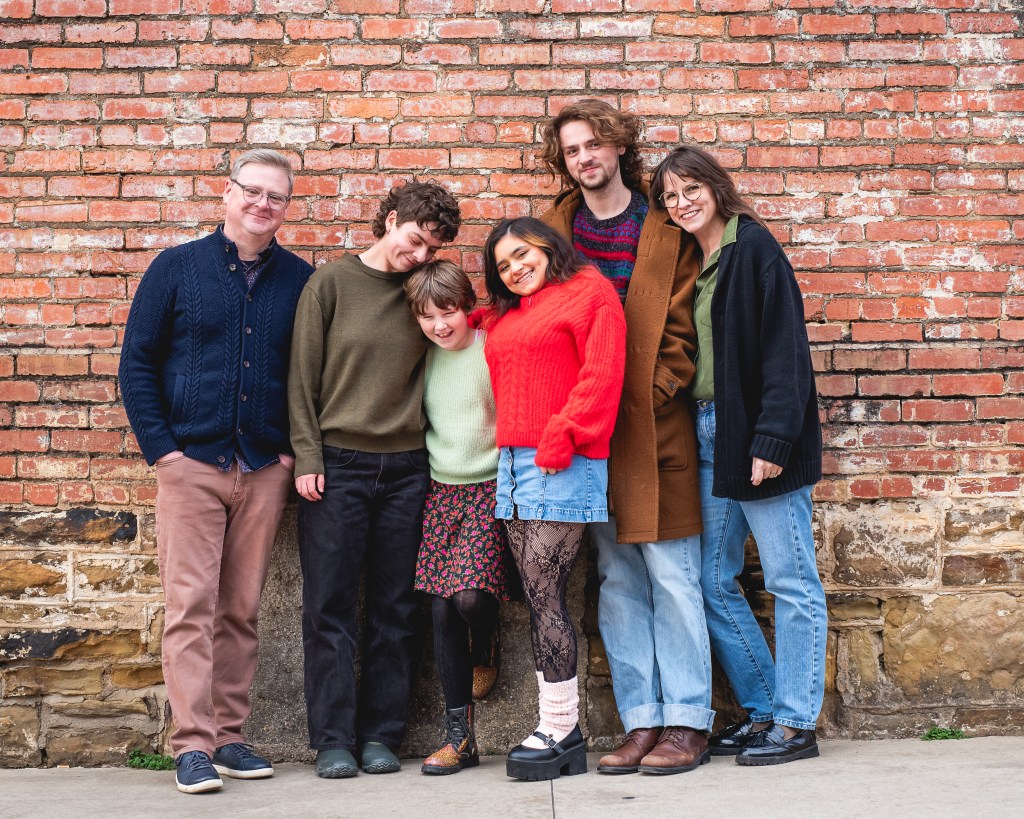
Robb Ryerse married his wife, Vanessa, at 21 years old, and 30 years later, the two are still happily married with four children.

They have a daughter at the art institution in Chicago. He bragged about her and joked, “‘Hey, I’m really proud of you, and you got into the most expensive art school in the country.’ There ya go.”
Their son attended school in NYC for filmmaking and is currently shooting a film in West Virginia.
They have a 21-year-old, who they fostered when she was 3 months, then after an incredible adoption journey, they adopted her when she was a year and a half.
Their youngest, 11 years old, and a surprise, he explained as a complete ray of sunshine in their lives, but they avoid doing the math. Robb laughed, “We’re going to be how old when she graduates high school?”
“So, it’s my family that I am most proud of.”
His Plan for 2026:
If he were elected in ‘26, he would have many problems to address.
“Broadly, I think the job of the representative is to actually represent the people in their district; it is literally the job title. And I don’t think Steve Womack does a good job of that. What he represents is his corporate donors. What I have found over the years, elected officials are loyal to the people who fund their campaign, not loyal to their voters, and so very broadly, I want to be a representative of the people of this district. Because so many of us don’t feel represented at all.”
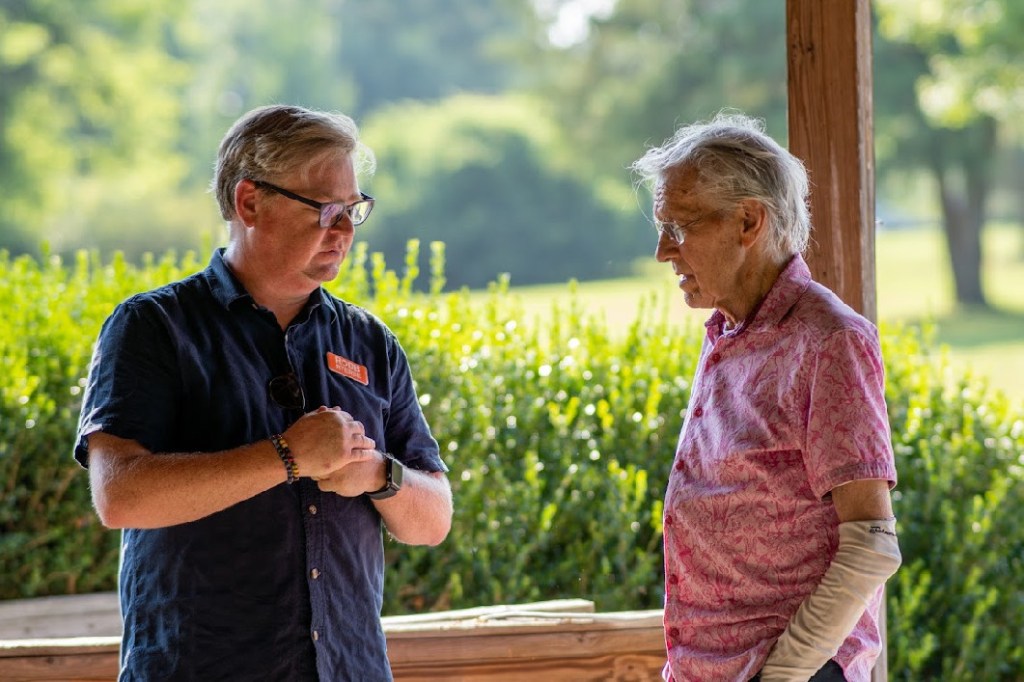
The list of policy issues continues to grow, from economic issues, involving the rise of the cost of living and housing, prices rising 70% since 2019, corporations raising prices without consequence, the impact of tariffs, and tax cuts for billionaires.
He believes healthcare is a human right and should not bankrupt families or restrict entrepreneurship because it is tied to employment.
The funding of elections is unconscionable, with billionaires and corporations able to sway elections, and there needs to be a change, Ryerse said.
America has to recover the sense of being that shining city on a hill that welcomes the world instead of punishing people who want to be a part of it.
There is much work to be done. And Robb Ryerse wants to be a part of it.
His Final Piece of Advice:
“What I have found in the work that we have done specifically in the Vote Common Good, helping people move along this path is when someone is going through a political identity crisis, and I’ve been there, my advice is to trust your gut. If something doesn’t sit well with you, don’t stuff that, listen to it, interrogate it, understand why and recognize there are all different sorts of ways to be engaged in politics as a person of faith. You’re not bound by what the quote unquote leaders tell you to do.”
“To be bold and gracious. I think people need to believe what they believe and be bold about that, and work to make a difference, and at the same time not be an asshole. I think love, kindness, and goodness would go a long way in making our world a better place. I know I may sound like I am in a beauty pageant, but my advice to people is to be bold and gracious.”
Extra: When He Met His Favorite Author on an Airplane
It was 11 o’clock at night, and he would have liked to be anywhere other than sitting in an uncomfortable plane seat, wishing nothing more than his company to have just coughed up the cash to put him in a hotel. Or maybe even first class.
But, they hadn’t. So, nevertheless, he was leaving California near the back of the plane, on an overnight, red-eye flight, and was not happy about it. And his wife, on the other end of the phone, just listened to him.
Then, in the midst of his complaints, he paused, watching a man pass by him.
“That’s Brian McLaren.”
The author of A New Kind of Christian. Many other things, too, many other books, but for Robb Ryerse, he knew that book. That book changed his life. It was the book that helped him after he left Fundamentalism, that he wasn’t the only one out there thinking these things, and looking for change.
He sat three rows behind him. The doors slowly closed on the plane, and there was a ringing silence. In the quiet, Robb stood, went back three rows, and said, “Hey, you’re Brian McLerran”.
The two men seated next to McLerran looked at Robb, then to Brian McLerran, most likely wondering, “Is this somebody we should know?”
He looked to the man in the middle, seated next to him, and asked, “Can I switch seats with you? Cause I’m on the aisle up here.”
There was a sudden look of horror on Brian’s face. He didn’t know who he was, nor did he want to stay awake all night talking, so with grace, he said, “How about we have breakfast in Atlanta?”
Robb barely slept that night, too anticipatory to have breakfast with his favorite author.
And they had breakfast in Atlanta.
He wrote the foreword in his book and has been a dear friend ever since.
 The Story of Their Life
Leave a comment